
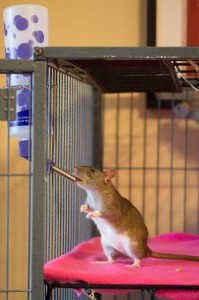
 CLEAN, FRESH water is essential to life.
Make sure your rats have easy access to plenty of clean water at all times. Most rats will naturally learn to use a bottle or a bowl on their own without any training or prompting.
IMPORTANT NOTE: Do a daily check of your rats’ water bottles to make sure they are working. Water bottles can stop working for no particular reason, so we recommend always having two bottles per cage. When you replace the water every day, turn the bottle upside down and compress the ball bearing at the tip several times to make sure water comes out. Rats can quickly die of dehydration.
Nutrition:
Scientifically speaking:
14% Protein, 4-5% Fat, GRAIN-based diet (for healthy, adult rats)
17-19% Protein, 7-11% Fat, GRAIN-based diet (for young, underweight, pregnant rats)
Generally speaking:
Your rats are omnivores that need a primarily PLANT-based diet. They should be gaining most of their nutrients, minerals and protein from grains, plants and a small portion of their essential fats and oils from seeds, or a few drops of flax seed oil or extra virgin olive oil. Rats also happen to be lactose intolerant, so no cheese or milk will be on this rodent diet.
Rats require a variety of foods. They enjoy different taste sensations, just as we do. Imagine having to eat just bread for the rest of your life. That is what it is like for rats who are fed the same pet store rat food, and nothing else. A rat’s health will suffer if they do not consume fresh vegetables and fruit daily, and a mix of grains and some seeds. Organic is best, if possible. And remember, anything considered junk food for us, is definitely junk food for your much smaller rats. For optimum health, we suggest providing a base diet of formulated food blocks, supplemented by a nutritious homemade rat mix.
For store-bought rat foods, avoid:
Seed mixes
Any store-bought diet with over 15% protein
Any pet food labeled for “cats”, or “dogs” or “ferrets”
Any pet food labeled for “rabbits”, “guinea pigs” or “chinchillas”
Consider:
Oxbow “Essential” Adult Rat Food
Home-Made Rat Mixes:
Rats Rule Home-Made Diet
Fancy Rats Home-Made Diet
Please note, that while a properly balanced home-made rat mix can completely replace a store-bought diet, this requires dedication, careful monitoring of your rat’s health, knowledge of nutrition and a continuous effort to research and understand the dietary needs of your pet rats. This is no simple task, but – if done correctly – can mean a healthier, more natural diet for your rats.
Fruits, Vegetables and Seeds:
Fresh fruits and vegetables should be included in your rats’ DAILY diet. They make the healthiest and tastiest treats that you can offer. If you can eat that fruit or vegetable raw, then your rats certainly can! Just make sure: NO CITRUS, APPLE SEEDS, OR RHUBARB!
The following foods have special properties that can be beneficial, but must be fed with great care:
- Avocado: high in nutrients and healthy fats; however avoid the pit and skin which are toxic and can be deadly, discarding any flesh that is in contact with either.
- Chocolate: dark chocolate has anti-oxidant properties. Can be used in tiny portions to help ease breathing, but deadly in larger doses
- Yogurt: rats are lactose intolerant, and will not digest dairy products; however, the good bacteria in yogurt can be beneficial after your rats have been treated with antibiotics. Avoid all sugary/fruity yogurt or any containing artificial colouring, sweetening or flavouring chemicals.
- Seeds are fatty, but very healthy if fed in moderation. Pumpkin seeds, almonds, walnuts, hazelnuts, sunflower seeds, etc. will be snatched up and devoured by any rat!
Not sure if your rats can eat something? Contact us.
Rats are intermittent feeders. This means, they will not gorge themselves on food, but instead, will regularly eat small amounts on hourly intervals. This is why, we always recommend that rats are free-fed their main diet. In other words, they should have access to a large stash of food blocks, or customized food mix at all times. To prevent a huge mess and fresh foods going bad, fruits and vegetables should be removed if they remain uneaten for more than 2 hours.